
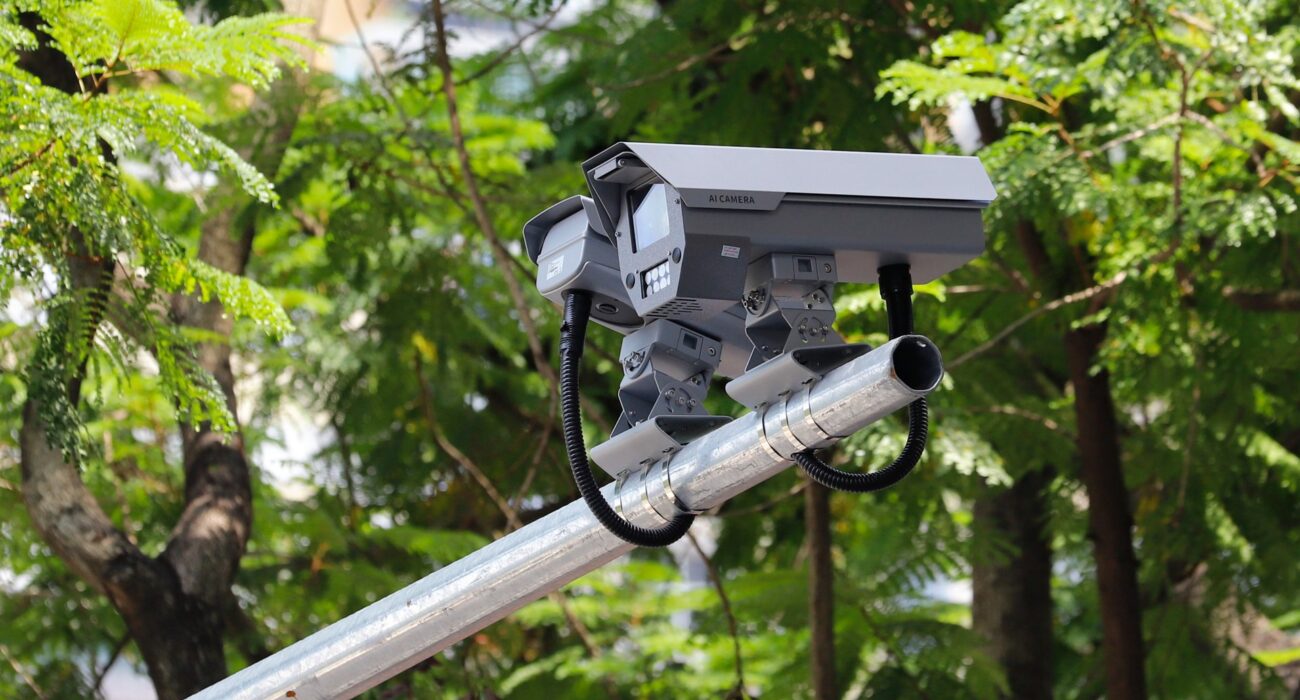
AI camera for urban management helps wards and communes monitor urban hotspots through visual data, enabling early event detection, recording time, location and image evidence, and sending alerts so that local authorities can respond in a timely manner.
In many local areas, urban violations often occur during specific time frames or repeatedly appear in certain locations. By applying AI cameras, local authorities can reduce their dependence on manual reports, proactively monitor the situation and collect visual data to support management activities.
Why do wards and communes need AI cameras for urban management?
At the grassroots level, the challenge does not only lie in the number of locations that need to be monitored. A bigger issue is the lack of real-time alerts to detect, verify and track recurring incidents. If local authorities rely only on manual patrols or review camera footage after receiving reports, many events may be missed, especially those occurring outside office hours, at night or during peak hours.
AI cameras help address this limitation by analyzing visual data in real time, automatically recording events and synchronizing data to the central operation platform. In practice, Hanoi, Quang Ninh, Lao Cai and Nghe An have deployed AI cameras across many streets, wards, communes and special administrative zones to support traffic monitoring, urban order management and violation handling. This shows that AI cameras are gradually becoming an important tool for proactive, data-driven local governance.
How does an AI camera system for urban management work?
An AI camera system for urban management combines video footage from cameras with AI models configured for specific monitoring scenarios. Depending on each location, the system can identify people, vehicles, objects or abnormal behaviors to generate alerts and store data for verification.
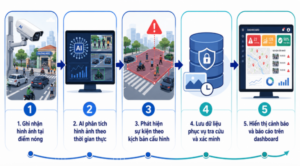
The basic workflow includes five steps:
Step 1: Capture images at urban hotspots
Cameras are installed at locations that require monitoring, such as markets, school gates, small streets, waste collection points, construction sites or public areas.
Step 2: Analyze visual data in real time
The system identifies objects appearing in the frame, such as people, vehicles, obstacles, waste, crowds or construction activities.
Step 3: Detect events based on predefined scenarios
Each area can be configured with monitoring zones, time frames, duration thresholds and types of behaviors to be tracked. For example, a vehicle stopping for too long in a restricted area can be recorded as an event that needs to be checked.
Step 4: Store data for search and verification
Each event is stored with images, time, camera location and alert type. This allows responsible officers to quickly search for relevant incidents without having to review the entire video footage.
Step 5: Display alerts and reports on the dashboard
Alerts are synchronized to the centralized management software, allowing wards and communes to monitor local conditions, classify events and coordinate responses according to established procedures.
Key features of AI cameras in urban management
1. Detecting sidewalk and roadway encroachment
Sidewalk and roadway encroachment often occurs around local markets, school gates, commercial streets or areas with heavy traffic. Activities such as street vending, placing tables and chairs, parking vehicles disorderly, gathering goods or setting up obstacles can affect urban aesthetics and obstruct traffic flow.
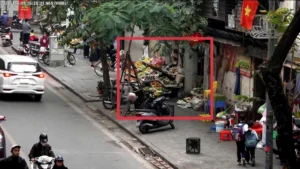
AI cameras support the monitoring of predefined surveillance zones. When the system detects a person, vehicle or object staying unusually long in a monitored area beyond the allowed time, it records the event, saves images and sends an alert for local authorities to verify. This approach helps local governments monitor encroachment more frequently, instead of responding only after citizen reports or during periodic enforcement campaigns.
2. Detecting illegal dumping
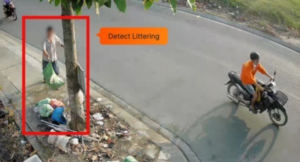
Illegal dumping often occurs in vacant lots, small alleys, under bridges, along roadsides or at unauthorized waste collection points. AI cameras help monitor restricted dumping areas, detect people or vehicles stopping abnormally and capture visual evidence of the event.
Data from the system helps wards and communes identify recurring dumping locations, common violation time frames and suitable actions for inspection, communication campaigns or adjustments to waste collection plans.
3. Monitoring construction activities and construction compliance
AI cameras for construction site monitoring help track construction areas, detect abnormal signs and store visual data for inspection, verification and post-audit purposes. The system does not replace construction inspectors or urban order officers, but it provides clearer evidence to support the monitoring process.
4. Monitoring illegal parking at urban hotspots
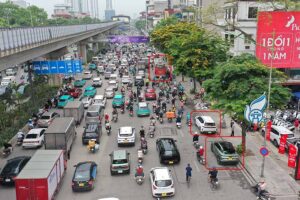
AI cameras can record vehicles stopping in restricted zones, staying too long or affecting traffic flow. When the data is aggregated over time, wards and communes can identify peak hours, frequently congested areas and develop more suitable traffic regulation plans.
5. Detecting crowds, conflicts or abnormal behavior
Some public areas such as parks, squares, school gates, night streets or entertainment areas may experience crowd gatherings, conflicts or abnormal behavior. If monitoring is done manually, operators may find it difficult to continuously observe all areas at the same time.
AI cameras can help detect unusual increases in the number of people, abnormal movement patterns, prolonged presence or signs of public order risks. When an event is detected, the system sends an alert to the operation center so that responsible officers can review the footage and coordinate the appropriate response.
6. Centralized management dashboard: the foundation of smart urban surveillance
The value of AI camera for urban management does not only come from event detection. It also lies in the ability to connect data to a centralized management platform. With a dashboard, operators can monitor the local area through a unified interface.
When data is centralized, wards and communes can go beyond handling individual incidents. They can also identify recurring patterns over time. For example, which streets are frequently encroached on in the evening, which illegal dumping points often reappear after 10 p.m., or which areas are regularly congested after school hours. These insights help local authorities make more evidence-based decisions instead of relying only on fragmented reports.
To manage multiple cameras, monitoring locations and event groups at the same time, wards and communes should deploy a centralized VMS combined with AI cameras. This platform enables camera data to be synchronized, classified and used more effectively for local operations.
>>> Read more: AI Camera Solution for Wards and Communes
ATIN supports urban management with AI-powered solutions
ATIN applies Computer Vision to transform camera systems from passive recording tools into intelligent surveillance and urban management platforms. The solution can be configured according to each area, behavior group and operational process of wards and communes.
From sidewalk encroachment, illegal dumping and construction monitoring to abnormal crowd detection, AI cameras help local authorities monitor their areas more proactively, respond faster and manage operations based on data instead of relying only on manual observation.
Conclusion
AI camera for urban management helps wards and communes monitor urban hotspots more proactively, from sidewalk encroachment, illegal dumping and obstructive parking to construction sites and abnormal crowd gatherings. The system supports early event detection, data storage and alerts so that relevant authorities can verify and handle incidents in a timely manner.
Deployment should begin with areas that receive frequent reports, such as markets, school gates, small streets or unauthorized waste collection points. After that, local authorities can evaluate actual performance before expanding the system across the entire area.
Is your locality looking for a more effective urban management system?
>>>Read more: AI Camera for Traffic Violation Monitoring