
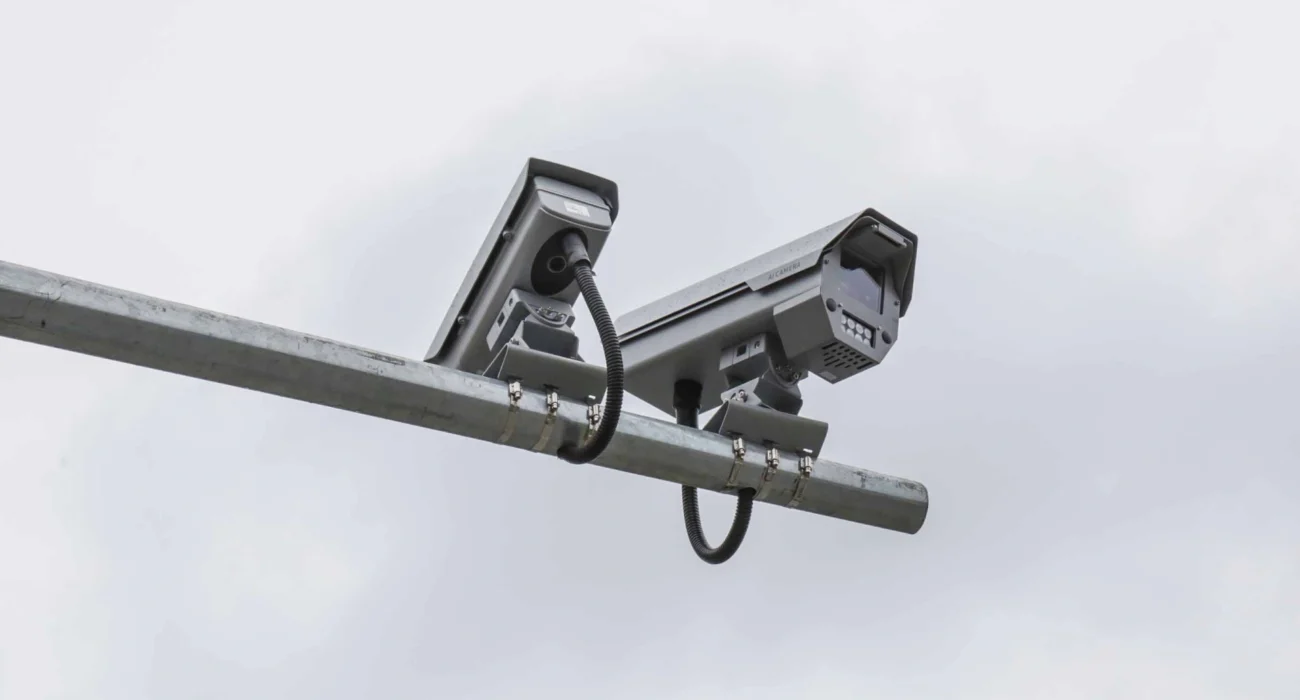
In local public security and order management, cameras are no longer used only for observation. They have become an important data source when authorities need to search for people, vehicles or events that have appeared within the area. However, with conventional cameras, officers still have to review each camera, each time frame and manually compare footage by eye.
AI Camera tracking changes the way camera data is exploited. The system can identify, analyze and search for people, vehicles, license plates or events based on time, location and the camera point where the data was recorded. As a result, competent forces can determine more quickly where a person or vehicle appeared, when it appeared and which areas it passed through.
What Is an AI Camera?
An AI Camera is a camera system integrated with Artificial Intelligence, Computer Vision and video analytics to automatically identify, record and analyze objects or events within a monitored area.
Unlike conventional cameras that only record footage for later review, AI Cameras can convert visual data into searchable data such as vehicle license plates, faces, vehicle types, time of appearance, camera location or event type. This means camera data is no longer fragmented, but can be used for monitoring, searching and operational management.
How Does an AI Camera Support Tracking?
An AI Camera supports tracking by searching for and linking multiple appearances of the same person, vehicle or event within video data. Operators can search for events using license plates, faces, identifying features, time frames, areas or specific cameras.
When an incident needs to be verified, the system helps consolidate relevant timestamps, locations and captured images. This supports faster area narrowing, data comparison and route reconstruction compared with manual video review.
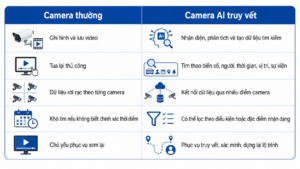
How Is AI Camera Tracking Different from Conventional Surveillance Cameras?
Conventional surveillance cameras are suitable for observation and playback. However, when officers need to quickly find a specific person, vehicle or event, manual operation reveals many limitations.
Officers must know exactly which camera to check, which time frame to review and then manually compare each video segment. If the incident involves multiple roads, multiple camera points or extends across several time periods, the review process can take a significant amount of time.
With AI Camera tracking, the system can return relevant results based on defined search conditions, helping shorten the review process and reduce dependence on manual operations.
Data Fields Recorded by AI Camera Tracking
Vehicle Tracking by License Plate and Movement Route
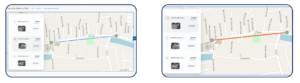
In an AI Camera tracking system, license plate recognition helps record the appearance history of a vehicle across multiple camera points. Each time a vehicle passes through a monitored area, the system can store the license plate, timestamp, camera location and vehicle image.
When verification is required, officers can search by license plate, time frame, area or vehicle characteristics to identify where the vehicle appeared, when it appeared and which camera points recorded it. In practice, AI camera systems in Hanoi have been able to trace vehicles and simulate movement routes. AI Cameras used by Hanoi Police have also been reported to recognize vehicles, license plates and traffic violations; violation data is automatically detected, extracted as images and transmitted to the command center for review and case processing.
Person Tracking Using Facial Recognition and Image Data
In addition to vehicles, AI Camera tracking also supports searching for people in video data based on conditions such as faces from authorized lists, identifying features, clothing color, time of appearance or camera location.
At ward or commune level, this feature can support situations that require quick verification, such as searching for missing persons, reviewing individuals appearing in controlled areas or comparing images across multiple camera points. In Hanoi, local authorities and residents once found an elderly man who had gone missing at night thanks to data from an AI Camera tracking system.
When deploying person tracking, data must be managed within the right scope, for the right purpose and with clear access permissions. AI Camera tracking is not a tool for arbitrary monitoring. It is a conditional video data search system designed to support verification in specific situations.
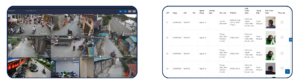
Searching AI Camera Data by Event and Area
In real local operations, not every situation begins with sufficient information to track immediately by license plate, face or identifying characteristics. In many cases, officers only have initial information such as the area where the incident occurred, the time range to be checked or the camera group that may have captured the event.
In this case, AI Camera tracking can support data filtering by camera location, camera cluster, route, time frame or configured event type. For example, officers can quickly review alerts related to illegal parking, unusual gatherings, intrusion into restricted areas, improper waste disposal, smoke/fire detection or abnormal behavior in monitored areas.
Each event is not stored only as video footage, but also includes time, location, recording camera and related images. As a result, when officers need to review the incident, they can access the exact group of data they need instead of replaying the entire video from the beginning. This helps the camera system better support verification and incident handling at ward or commune level.
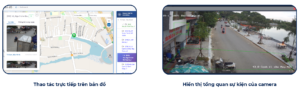
How Does the AI Camera Tracking Process Work?
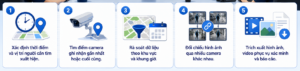
To track people, vehicles or events, AI Cameras do not simply replay video like a manual surveillance system. The system receives search conditions, reviews data from multiple cameras, compares related appearances and displays the results as images and video clips with information about time, location and event type. This allows officers to quickly verify the target without replaying each video segment separately.
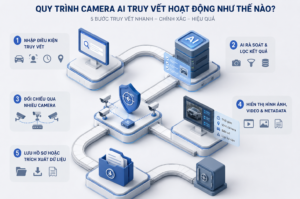
Step 1: Enter Tracking Conditions
The operator begins by entering search conditions into the system. These conditions may include a vehicle license plate, a face from an authorized list, identifying features, clothing color, vehicle type, time frame, area or event type to be checked.
At ward or commune level, not every situation has complete information from the beginning. In some cases, officers only know that the incident occurred on a certain road, near a specific camera or within a certain time range. Therefore, the system needs to support flexible search based on multiple conditions, from specific information such as license plates to broader information such as area, time or camera group.
Step 2: AI Reviews and Filters Matching Results
After receiving the tracking conditions, the AI Camera system searches through analyzed and stored video data. The key difference is that camera data is not stored only as raw video. It is also attached to structured information such as time, camera location, license plate, identifying features, event type or related images.
Thanks to this data, the system can quickly filter relevant results instead of requiring officers to review the entire video manually. For example, if officers need to search for a vehicle by license plate, the system can return all appearances of that vehicle at each camera. If officers need to review an event, the system can filter data by area, time frame or configured alert type.
Step 3: Cross-Check Across Multiple Cameras
When an incident involves multiple monitoring points, the system cross-checks data from several cameras to identify related appearances. This is an important step that connects fragmented data into a verifiable information chain.
For example, a vehicle may first appear at a school gate, then pass through a main road and later be recorded near a market. With AI Camera tracking, these appearances can be linked by time, location and identifying characteristics to help officers reconstruct the relative movement route of a vehicle or person.
Step 4: Display Images, Videos and Metadata
After filtering and cross-checking the data, the system displays results as images, relevant video clips and accompanying metadata. Metadata may include recorded time, camera location, camera name, license plate, identifying features, event type and processing status.
At this step, officers not only see the search results but also have supporting information for verification. Displaying images, videos and event information together makes the verification process clearer and reduces dependence on subjective judgment or manual review across multiple screens.
Step 5: Save Records or Export Data
After verification, relevant data can be saved or exported for reporting, operational handling and future retrieval. A tracking record may include images of the subject, relevant video clips, appearance time, camera location and the officer’s verification result.
This step helps camera data become a practical basis for local management, instead of being only stored footage for post-incident review. For situations requiring coordination, systematized data also makes reporting and information handover faster and clearer.
Trends in Using AI Camera Data for Tracking at Ward/Commune Level
For ward and commune police forces, AI Camera tracking is valuable because it can quickly search for the movement route of a person or vehicle within camera data. The system does not replace professional forces, but helps reduce video review time, narrow down relevant areas and provide clearer initial data.
The core value of AI Camera tracking lies in linking separate appearances of the same subject into a verifiable data chain. In situations such as finding missing persons, verifying individuals who leave the scene after a violation, tracking vehicles that flee after a collision or supporting the review of suspicious subjects, officers can search by license plate, identifying features, time, camera location and movement direction.
| Situation | How AI Camera Tracking Supports |
| Missing person | Finds the latest recorded appearance, timestamp and movement direction |
| Person leaving the scene after a violation | Cross-checks appearance history across multiple cameras |
| Vehicle fleeing after a collision | Searches by license plate, vehicle image, time and camera location |
| Suspicious subject / fugitive | Reviews the appearance route by area and time frame |
| Suspicious vehicle | Retrieves camera points that recorded the vehicle |
Instead of reviewing each camera separately, the system consolidates appearance points in chronological order. This gives competent forces additional evidence to determine where the subject appeared, which direction they moved and where they were last recorded.
Conditions for Effective AI Camera Tracking

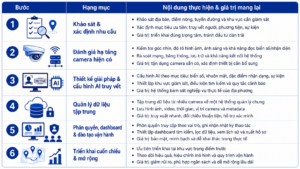
How Does ATIN Deploy AI Camera Tracking for Wards and Communes?
To ensure maximum feasibility and cost-effectiveness for each locality, ATIN’s AI Camera tracking solution is deployed through a comprehensive, customized approach based on each locality’s existing infrastructure and management requirements.
Before deployment, ATIN surveys the existing camera system, installation locations, image quality, network connectivity, storage capacity and local officers’ handling procedures. Based on this assessment, ATIN proposes a suitable model: reusing existing cameras if they meet technical requirements, adding cameras at critical points and configuring tracking scenarios according to real operational needs.
Data from individual cameras is tightly structured based on key information fields such as time, location, license plate and event classification. This helps optimize the search process and support better decision-making for management officers.
This model allows ward and commune-level administrative units to apply a phased deployment strategy: focusing resources on priority areas, standardizing operating procedures, then gradually expanding the coverage and integrating more advanced AI technologies. This is an optimal approach to address budget constraints, maximize existing technology assets and keep system risks under control.
Conclusion
AI Camera tracking helps upgrade the way camera data is used at ward and commune level. Instead of reviewing individual video segments, the system enables users to search for people, vehicles, license plates or events based on specific conditions, while connecting appearances across multiple camera points.
When deployed properly, AI Camera tracking can support missing person searches, vehicle violation tracking, public security incident verification and faster camera data processing.
>>>See more:
AI Camera Surveillance Solution for Wards/Communes
AI Camera for Traffic Violation Monitoring in Wards/Communes