
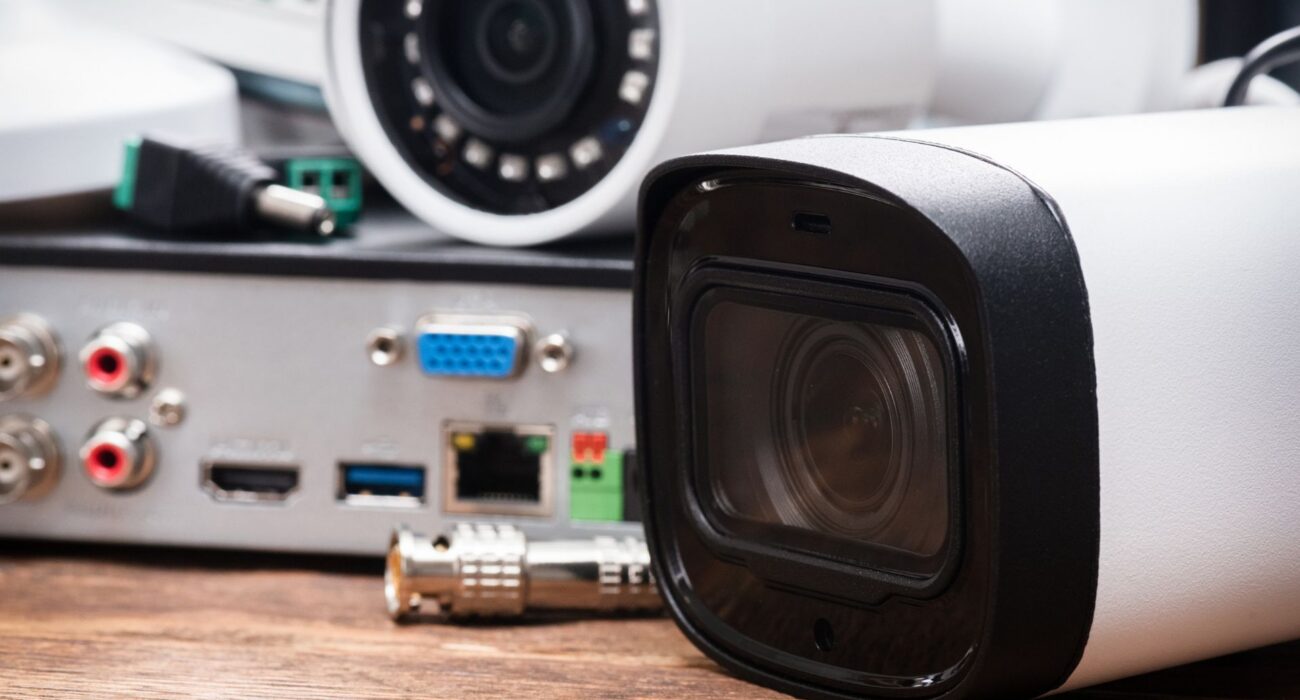
Today, AI is redefining how banks manage and operate their systems. No longer limited to familiar applications such as data analytics or customer service chatbots, AI has expanded into the field of intelligent video surveillance. At critical touchpoints such as headquarters, ATMs, parking areas, and high-security transaction zones, Computer Vision solutions are gradually replacing manual monitoring processes, helping banks improve surveillance efficiency and prevent operational risks in real time.
Driven by these practical needs, AI Cameras are increasingly being adopted as proactive surveillance assistants that replace traditional manual monitoring methods. Instead of passively recording footage and requiring managers to search through hours of video after an incident has already occurred, AI Cameras enable a shift toward proactive, data-driven monitoring.
Built on a Computer Vision platform optimized for ease of operation, the system can automatically identify people and vehicles, analyze behavior, and detect abnormal situations in real time. This allows operations teams to identify and manage risks at an early stage rather than spending hours manually reviewing footage after each incident.
What Is an AI Camera in Banking?
An AI Camera in banking is not simply an upgraded recording device. It is a comprehensive intelligent surveillance solution powered by artificial intelligence and Computer Vision.
Rather than playing a passive role by storing raw footage for post-incident review, the system can analyze live video streams to proactively identify and classify people, vehicles, behaviors, and abnormal scenarios as soon as they occur.
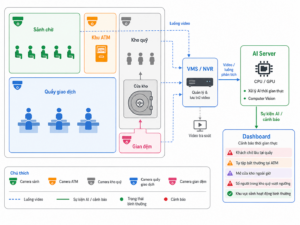
The application of AI Cameras allows banks to establish an intelligent security network across their entire physical environment, from public areas such as parking facilities, ATMs, and waiting halls to customer-facing areas such as transaction counters and highly restricted zones such as cash vaults and server rooms.
Within this network, visual data is converted into structured digital events that can trigger real-time alerts, generate system logs, support rapid searches, and produce management reports. This represents a critical technology layer that helps banking executives strengthen security controls, standardize operating procedures, and enforce compliance based on actual operational data.
How Are AI Cameras Different from Conventional Surveillance Cameras?
| Criteria | Conventional Surveillance Cameras | AI Cameras in Banking |
| Primary function | Record footage, transmit images to a monitoring center, and store video. | Record footage while performing real-time AI and Computer Vision analysis. |
| Event detection method | Depends on security personnel manually observing camera feeds and identifying incidents. | Automatically identifies people, behaviors, areas, and abnormal events based on configured scenarios. |
| Alerting capability | Cannot generate alerts without an additional supporting system. | Automatically generates alerts when risks are detected, such as excessive customer waiting times, employees leaving their counters, unauthorized area access, or vault-opening procedures not being followed. |
| Data generated | Primarily raw video for later review. | Generates structured event data, including time, camera location, images, video clips, alert type, and handling status. |
| Post-incident investigation | Time-consuming because multiple video streams must be reviewed manually. | Enables rapid searches by person, area, time, business process, or risk level. |
| Value for banks | Supports observation and video storage. | Provides comprehensive support for security, internal control, operational procedure compliance, and service quality improvement. |
Key Computer Vision Application Groups in Banking
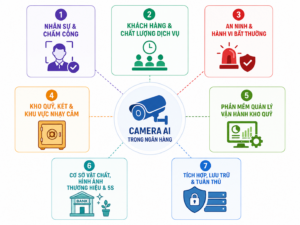
To maximize the effectiveness of technology adoption, AI Camera systems can be divided into specific operational application groups, ranging from workforce management and service quality measurement to security monitoring, vault protection, and data compliance.
This clear classification allows banks to identify which areas should be prioritized for AI implementation, assess technical feasibility, and establish a practical and reliable phased deployment roadmap.
Group 1: Workforce Management and Time Attendance
AI Cameras can support functions such as facial recognition, automated time attendance, employee and customer classification, workstation monitoring, uniform and name badge inspection, and the detection of certain inappropriate behaviors in transaction areas.
These capabilities help banks reduce errors and fraud in timekeeping, improve workforce management accuracy, and strengthen oversight of situations such as employees leaving transaction counters, security guards being absent from assigned positions, or unauthorized individuals entering restricted areas.
The system also helps maintain professional conduct, service standards, and consistent operating quality across branches.
Group 2: Customers and Service Quality
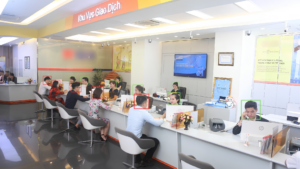
AI Cameras help banks measure service quality at branches through indicators such as customer traffic, density by time period, waiting times, and transaction processing times.
The system can automatically define queue zones and monitor the number of people waiting, enabling timely alerts when customer density exceeds a configured threshold or when a customer has been waiting too long without being served.
The solution can also generate heatmaps to analyze the concentration and movement of customers and employees within different areas of a branch.
For more advanced use cases, the system can support presence verification and confirm that the person conducting a transaction is the authorized customer. It can also measure customer experience using aggregated data without evaluating individual customers separately.
Group 3: Security and Abnormal Behavior
Security is one of the core application groups for AI Cameras. The technology helps banks identify risks at an early stage in transaction halls, ATM booths, branch premises, vault areas, and restricted zones.
The system can automatically generate alerts for incidents such as disturbances, physical fights, masked individuals, suspicious loitering, unattended objects, after-hours intrusion, crowd gathering, or unfamiliar individuals entering back-office areas.
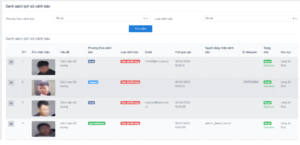
The solution can also support the identification and tracking of individuals included in internal watchlists, detect falls, and provide early detection of smoke, fire, or potential fire and explosion risks.
For highly complex use cases such as weapons detection, explosive material detection, or dangerous behavior recognition, banks should conduct a Proof of Concept before full deployment. This allows the organization to test real-world data and configure appropriate alert thresholds.
Group 4: Cash Vaults, Safes, and Sensitive Operational Areas
Cash vaults are among the areas requiring the strictest level of security. AI Cameras can support the monitoring of compliance with vault opening and closing procedures, movement through vault anterooms, activities involving safes, and operations within other sensitive areas.
The system helps banks monitor vaults and anterooms based on criteria such as the number of people present, entry and exit times, vault door status, and the level of procedural compliance.
When the system detects an unauthorized person, an inappropriate number of personnel, or an operation that appears to deviate from established procedures, it can generate an alert for the responsible department to review and handle.
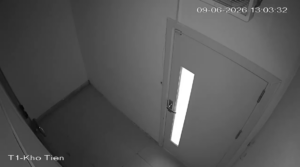
The solution can also help monitor items brought into restricted areas, activities involving safes and assets, and processes related to cash inventory, sealing, management, and the receipt or release of collateral assets.
For risks such as theft or asset substitution, AI Cameras may detect notable indicators such as an individual remaining alone in the area, staying for an unusually long period, bringing personal belongings into the vault, or performing unusual actions.
However, the system only serves as a surveillance and alerting tool. It does not completely replace human personnel in verifying and handling suspected fraudulent activity.
Group 5: Vault Operations Management Software
To improve the effectiveness of vault management, AI Cameras can be integrated with software for managing operational processes and data.
The platform supports the digitization of registration information, the management of participating personnel, activity schedules, and requirements related to opening, closing, or accessing the vault.
Data from the camera system can be used to support information verification, monitor compliance, and record events occurring in the vault area.
This allows banks to centrally manage operational histories, images, timestamps, and handling statuses for inspection, investigation, reconciliation, and reporting purposes.
When the system detects inconsistent information or signs of deviation from established regulations, it can send alerts through configured channels, enabling the responsible department to conduct timely checks and take appropriate action.
Group 6: Facilities, Brand Image, and 5S Standards
In addition to security and operational applications, AI Cameras can support banks in monitoring the appearance and condition of transaction locations. This includes standards related to brand identity, cleanliness, 5S practices, equipment status, and general organization within branches.
The system can automatically detect obstructed signs, logos, or standees; signage lighting that has not been switched on at the required time; waste or unnecessary objects; and entrances that have been obstructed in front-of-house areas, lobbies, or waiting zones.
At transaction counters and workstations, the solution can assess the arrangement of documents, personal belongings, and items placed under desks to help ensure compliance with 5S standards.
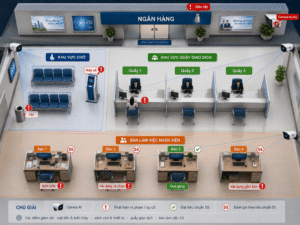
The system can also generate alerts when cameras are obstructed or misaligned, fire safety or security equipment has been moved, LCD screens, televisions, or queue management machines are not operating, or parking and pavement areas do not meet appearance standards.
This application group is particularly suitable for large banks that need to maintain consistent operating standards across an extensive branch network.
Group 7: Integration, Data Storage, and Compliance
AI Camera solutions must integrate with banking systems and meet strict requirements for data security, storage, alerts, reporting, and compliance. They can connect with HRM, Core Banking, IAM, SIEM/SOC, fire protection, and physical alarm systems to synchronize employee data, reconcile transactions, manage access rights, and forward security events.
The solution may also support document OCR for citizen ID cards, contracts, receipts, and payment vouchers, as well as facial matching between identity documents and customers at transaction counters.
Video, event, facial, license plate, access history, and vault data must be encrypted, access-controlled, audit-logged, and stored in accordance with the bank’s data governance policies.
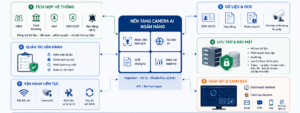
The system should also provide real-time dashboards, multi-channel alerts, scheduled reports, and backup operating mechanisms in the event of power outages, network failures, or camera malfunctions. Therefore, AI Camera deployment in banking requires a comprehensive approach to system integration, data security, compliance, and operational governance.
Practical Benefits of AI Cameras in Banking
AI Cameras help banks move beyond passive video recording by turning visual data into real-time alerts and actionable operational insights. Their practical benefits are mainly reflected in three areas: security, operations, and compliance.
For security, AI Cameras can detect suspicious behavior at ATMs, identify watchlisted individuals, and alert staff to unauthorized access in restricted areas. Each alert includes the time, location, and relevant images, enabling security teams to verify and respond to incidents more quickly.
For daily operations, the system can analyze customer traffic, queue lengths, and waiting times at transaction counters. This data helps branch managers identify peak hours, allocate staff more effectively, reduce service bottlenecks, and improve the customer experience.
In high-risk areas such as cash vaults, anterooms, and server rooms, AI Cameras support compliance by monitoring procedures, recording events, and maintaining visual audit trails. This makes internal reviews and reconciliation faster while helping banks detect and prevent operational deviations at an early stage.
Overall, AI Cameras in banking provide more than surveillance. They support proactive risk management, data-driven operations, and stronger compliance across branches and critical banking facilities.
ATIN Provides AI Camera Consulting for Banks
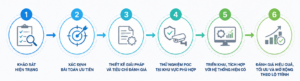
AI Camera solutions for the banking sector cannot be deployed as standardized, one-size-fits-all packages.
Each bank has its own operational procedures, branch architecture, security standards, technology infrastructure, and level of data readiness. Therefore, the solution must be customized for each specific operational challenge.
ATIN approaches these requirements by applying advanced Computer Vision to banking operations and flexibly integrating modules such as facial recognition, behavior analysis, access control, vault monitoring, real-time alerts, and event reporting dashboards.
The deployment model is designed in phases, beginning with a Proof of Concept in priority areas before being expanded across the bank’s branch network and operations centers.
Conclusion
AI Camera technology is introducing a new approach that helps banks strengthen security, optimize operations, improve service quality, and reinforce compliance in critical operational areas.
Instead of merely recording footage passively, the solution enables surveillance systems to operate proactively by identifying risks early, digitizing event data, generating real-time alerts, and supporting data-driven management decisions.
To ensure effective implementation, banks should begin by clearly identifying priority use cases, conducting a comprehensive assessment of their existing infrastructure, and developing a suitable phased deployment roadmap.
Does your bank need to deploy an AI Camera system across its headquarters and nationwide branch network?