
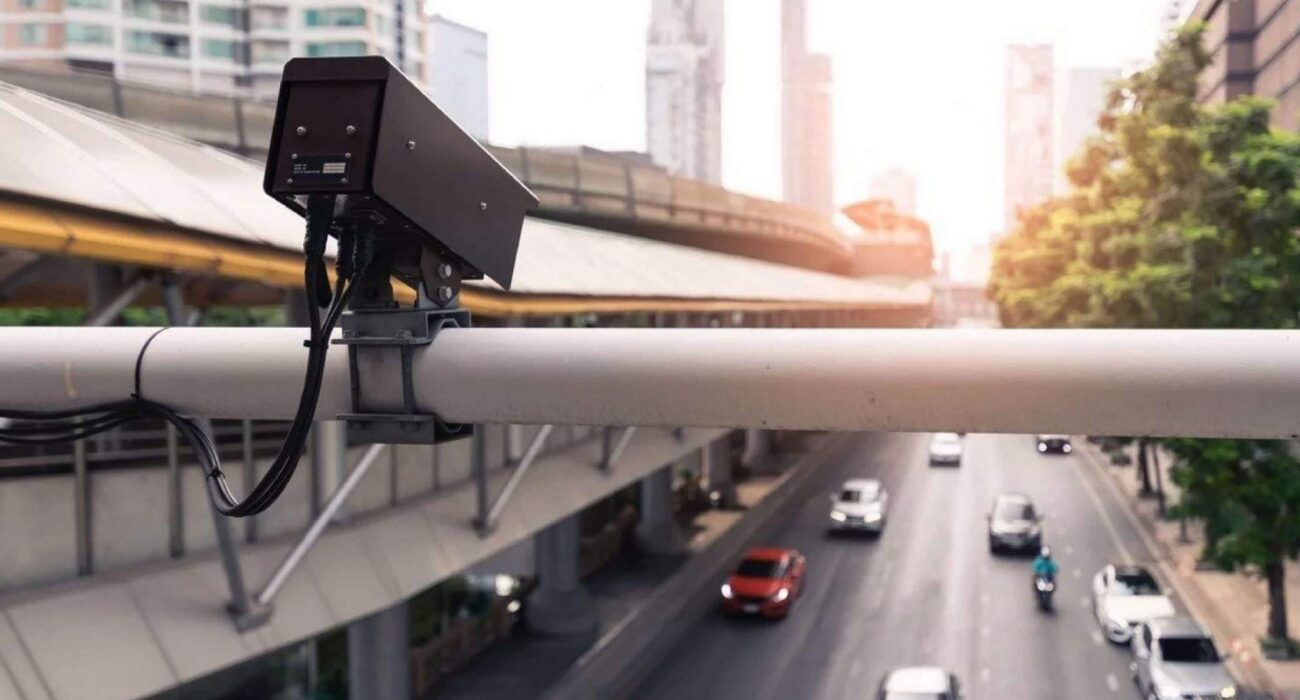
At the ward and commune level, traffic violations often occur in familiar public areas such as school gates, local markets, small streets, residential areas, areas in front of administrative offices, and food, beverage, or entertainment service zones at night. In many localities, traffic violations around school gates, illegal stopping, and improper parking that obstruct traffic flow are still frequently reported. This highlights the need for a more continuous and proactive traffic monitoring approach.
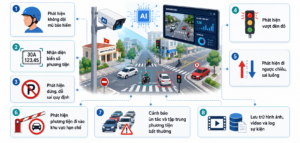
AI cameras directly address this gap. The system can automatically detect violations, capture images and videos, recognize license plates, send alerts, and consolidate traffic data by location. Instead of using cameras only to review footage after an incident, wards and communes can leverage AI cameras as a proactive tool to monitor traffic more effectively, collect clearer data, and reduce pressure on local enforcement teams.
What Is an AI Camera for Traffic Violation Monitoring?
An AI camera for traffic violation monitoring is a system that combines surveillance cameras, image analysis algorithms, and centralized management software. The system does not simply record video. It can automatically identify vehicles, detect violation behaviors, and generate alerts based on preconfigured scenarios.
In the context of wards and communes, AI cameras serve as a supporting tool for monitoring and management. The system does not replace competent authorities and does not automatically issue penalties. Its core role is to detect incidents early, record data, send timely alerts, and provide visual evidence for inspection and verification.
The handling of traffic violations must still follow the proper legal authority and procedures. In Vietnam, Decree No. 168/2024/ND-CP on administrative penalties in the field of road traffic order and safety took effect on January 1, 2025.
Key Functions of AI Cameras in Ward/Commune Traffic Monitoring
Helmet Violation Detection
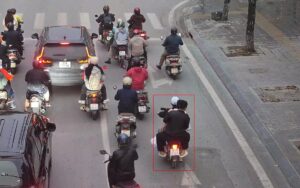
Failure to wear a helmet is a common violation around school gates, local markets, residential areas, and roads with a high volume of motorbikes and electric bikes. AI cameras can analyze images of riders passing through a monitored area to determine whether they are wearing helmets.
When a violation is detected, the system automatically records the image, time, camera location, and creates an alert event on the management software. This data allows responsible personnel to review incidents more easily and generate statistics by time frame or location.
The key value of this function lies in its continuous monitoring capability. Instead of relying only on direct human observation, the system can record violations consistently during peak hours, such as school arrival and dismissal times, market hours, or periods with heavy motorbike traffic.
License Plate Recognition
License plate recognition is a critical function in any AI traffic camera system. The system can automatically read and digitize vehicle license plates as vehicles pass through the monitoring area. License plate data is stored together with images, video footage, timestamps, and detection locations.
At the ward and commune level, license plate data helps authorities search for vehicles related to events such as illegal parking, driving in the wrong direction, running red lights, or entering restricted areas. When residents submit complaints or reports, responsible officers can retrieve relevant events much faster instead of reviewing hours of video footage manually.
Illegal Stopping and Parking Detection
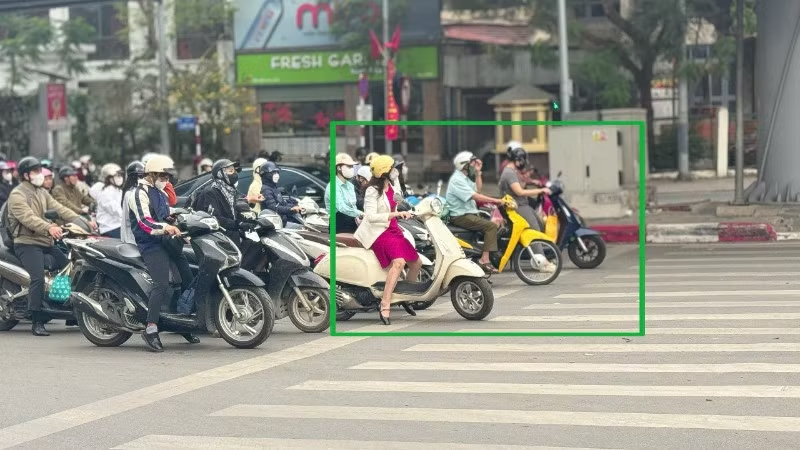
Illegal stopping and parking are among the most common traffic management issues at the local level. Just a few vehicles stopping for too long in front of a school gate, market, residential entrance, or crowded business area can disrupt traffic flow.
AI cameras can be configured with no-stopping zones, no-parking zones, or areas that must remain clear. If a vehicle remains in the defined area longer than the permitted duration, the system automatically generates an alert. Each event may include a snapshot, short video clip, license plate number, timestamp, and detection location.
This function allows local management teams to avoid continuously watching multiple camera screens. When an alert is triggered, officers can quickly review the situation and choose the appropriate response, such as giving a reminder, coordinating traffic flow, increasing on-site inspection, or forwarding information to field personnel.
Red-Light Violation Detection
At intersections with traffic lights, AI cameras can support the detection of red-light violations by analyzing the traffic light status, stop line, and vehicle movement direction. When a vehicle crosses the monitored zone during a red light, the system records the event with images and video evidence.
For wards and communes, this function is suitable for smaller intersections that experience high traffic volume during peak hours. The recorded data not only supports violation verification but also helps local authorities assess compliance levels at specific traffic points.
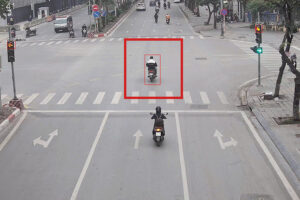
If red-light violations occur frequently at a particular intersection, management units can consider adjusting traffic light cycles, adding warning signs, improving road markings, or strengthening communication and awareness campaigns in that area.
Wrong-Way and Wrong-Lane Movement Detection
Many small streets, market areas, and roads near school gates are organized as one-way routes to reduce traffic conflicts. However, wrong-way driving still occurs frequently, especially during peak hours.
AI cameras can identify the movement direction of vehicles within the frame. When a vehicle moves against the configured direction, the system automatically records the incident and sends an alert.
This function not only helps detect violations but also provides data for evaluating the effectiveness of traffic organization. If a road repeatedly records wrong-way movement, wards and communes can review road signs, soft barriers, lane markings, or time-based traffic flow plans.
Restricted Area Entry Detection
Some areas require vehicle restrictions based on time, purpose, or local management needs. Examples include pedestrian streets, temporary market areas, construction zones, truck-restricted roads, school gate areas, and event venues.
AI cameras allow administrators to set up virtual monitoring zones directly on the video interface. When a vehicle enters an unauthorized zone, the system generates an alert. Administrators can configure the monitored area, effective time, vehicle type to be monitored, and alert level.
This function is highly suitable for ward and commune management, where each area may have different traffic regulations that change depending on time, events, or real operational needs.
Congestion and Abnormal Vehicle Density Alerts
Not every traffic situation is a specific violation. Some cases need to be detected based on vehicle density, such as excessive vehicle concentration in front of school gates, congestion around markets, traffic buildup on narrow streets, or long vehicle queues near evening service areas.
AI cameras can analyze vehicle density within a monitored zone. When the number of vehicles exceeds a defined threshold or congestion lasts for a certain period, the system sends an alert so responsible teams can check and coordinate traffic flow.
This function helps wards and communes manage traffic more proactively. Instead of waiting for public complaints or responding only when congestion has become severe, the system helps identify early signs of abnormal activity at local traffic hotspots.
Image, Video, and Event Log Storage
An effective AI camera system should store data by event, not only as long video recordings. Each event may include the violation type, time, camera location, snapshot, short video clip, vehicle license plate, processing status, and assigned handler if role-based permissions are configured.
This event-based storage method significantly improves search efficiency. Officers can filter data by date, location, violation type, or license plate number. When verifying a complaint or report, the system helps locate the exact event instead of requiring users to rewind and review hours of footage.
Structured data also increases transparency in local management. Each event is clearly recorded with time, location, and supporting images, making it easier to prepare reports and cross-check information when needed.
Reporting Dashboard: Understanding Traffic Conditions by Area
If AI cameras only provide alerts, they only solve individual incidents. The more important component is the reporting dashboard, where data from multiple cameras is aggregated to support management and decision-making.
The dashboard can display the number of violations by day, week, or month; common violation types; time frames with high event frequency; locations with repeated violations; alert processing status; and reports by area.
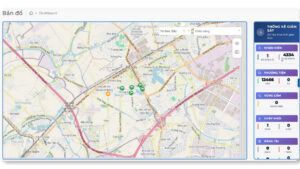
For example, if data shows that illegal parking frequently occurs in front of a school gate from 6:30 AM to 7:30 AM, local authorities can assign personnel to the right time frame. If a street regularly records wrong-way driving, the traffic flow plan may need to be reviewed. If a market area experiences recurring congestion on weekends, authorities can adjust traffic organization or strengthen on-site guidance.
The dashboard ensures that camera data is not used only for playback, but becomes a practical basis for traffic management and operational decision-making.
Real-World Applications in Localities
In Lao Cai, ATIN has implemented an AI camera system for ward/commune-level public security monitoring, covering people, vehicles, and traffic violation scenarios. The system supports license plate recognition, violation recording, facial recognition, object tracking, and centralized dashboard monitoring. In this project, ATIN recorded a reduction of more than 30% in traffic violations, a 40% saving in manual manpower, and a 20% improvement in management efficiency.
The application of AI cameras is also being expanded to local administrative levels in many provinces and cities. In Hanoi, 1,837 AI cameras have been put into operation across 25 key streets, supporting violation recording, camera-based enforcement, and real-time traffic monitoring.
Meanwhile, Quang Ninh has deployed nearly 300 AI cameras across wards, communes, and special administrative areas to monitor traffic, recognize vehicle license plates, and detect violation behaviors.
In Nghe An, a system of more than 600 surveillance cameras installed in Vinh City supported the handling of nearly 6,800 traffic violations in the first six months of 2025, demonstrating clear effectiveness in urban traffic management and operation.
In Can Tho, 119 AI cameras can detect, recognize, store, and retrieve traffic violation data in real time, recording more than 14,000 violations per month.
AI Cameras Support, Not Replace, Competent Authorities
AI cameras do not replace the role of competent authorities. The system helps detect incidents early, record data, send alerts, and provide visual evidence for verification. Reminders, communication, inspection, and violation handling must still be carried out in accordance with legal regulations and the authority of responsible agencies.
This approach ensures that technology is used in the right role. AI cameras increase area coverage, reduce dependence on manual observation, improve the objectivity of data, and support the development of a more orderly traffic environment.
Conclusion
AI cameras for traffic violation monitoring at ward and commune level help local authorities shift from manual monitoring to proactive, data-driven management. The system supports violation detection, license plate recognition, real-time alerts, event-based storage, and consolidated reporting, giving competent authorities a stronger basis for monitoring, verification, and appropriate management adjustments.
Is your locality looking for a more effective traffic violation monitoring system?